Views: 318 Author: Site Editor Publish Time: 2026-03-03 Origin: Site


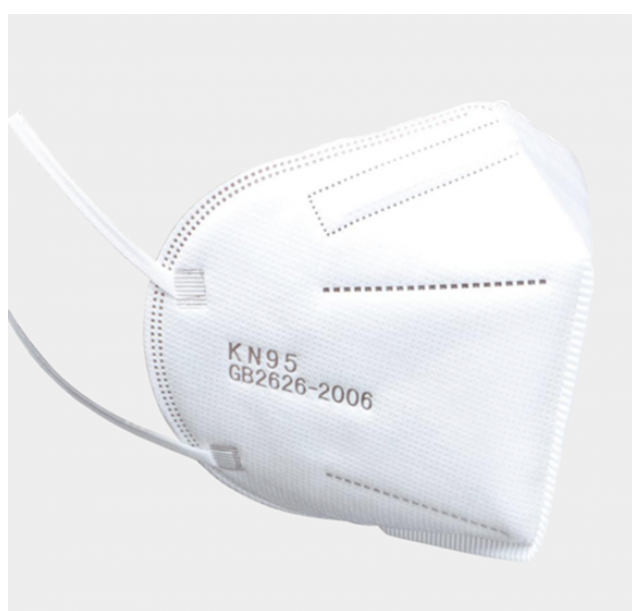
When it comes to personal protective equipment (PPE), few items have garnered as much attention as the N95 respirator. Unlike standard disposable masks, N95s are engineered to filter out at least 95% of airborne particles. However, a common question persists among healthcare professionals and the general public: how long can you actually wear one before it loses its effectiveness?
Understanding the maximum service life of these high filtration disposable masks is critical for maintaining safety standards. While manufacturers often label them as "single-use," real-world scenarios—especially during supply shortages—have forced a re-evaluation of their longevity. In this guide, we dive deep into the technical, environmental, and physical factors that determine when an N95 mask has reached the end of its life.
The lifespan of an N95 is not just about time; it is about the integrity of its electrostatic charge. Unlike simple 3-ply non-woven disposable masks, N95 respirators rely on a specialized melt-blown fabric layer that carries a static charge. This charge attracts and traps microscopic particles. Over time, the moisture from your breath and the accumulation of dust reduce this charge.
We must differentiate between "shelf life" and "service life." Shelf life refers to how long a mask remains effective while sitting in its original packaging. Service life is the duration it functions correctly once you put it on your face. Most health organizations suggest a limit of 8 to 12 hours of continuous use for disposable masks in high-risk settings. However, if the environment is relatively clean, this might extend slightly, provided the structural fit remains perfect.
Factor | Impact on N95 Service Life | Comparison to Standard Disposable Masks |
|---|---|---|
Particle Loading | High dust levels clog fibers quickly. | Standard masks clog slower but filter less. |
Humidity | Breath moisture degrades electrostatic charge. | Breathable disposable masks handle moisture better but lack N95 seal. |
Fit/Seal | Elastic straps stretch out over time. | Ear loops on surgical disposable masks break easier. |
Physical Damage | Creases or tears ruin the filtration. | Less critical for low-level disposable masks. |
To maximize life, it's vital to avoid touching the front of the mask. Contaminants from your hands can transfer to the material, potentially degrading the fibers or introducing pathogens that shorten its safe usage window.
Knowing when to toss your mask is as important as knowing how to wear it. Even high filtration disposable masks have a breaking point. We categorize these signs into three main areas: breathing resistance, physical integrity, and hygiene.
Increased Breathing Resistance: If it feels significantly harder to draw a breath than when you first put it on, the mask is "loaded." This means the pores are filled with particles.
Visible Soiling: Any blood, respiratory secretions, or visible dirt means the mask is compromised. Unlike biodegradable disposable masks which might break down differently, a soiled N95 is a biohazard.
Loss of Seal: This is the most dangerous failure. If the metal nose clip snaps or the straps lose their "snap," the mask is no longer an N95; it's just a loose-fitting piece of fabric.
Professional users undergo annual fit testing. For everyday users, a "user seal check" is necessary every time you don the mask. If you feel air leaking around your nose or chin, the service life has effectively ended for that specific session. While some breathable disposable masks are designed for comfort, an N95 prioritizes the seal. If that seal fails after 4 hours or 10 hours, the mask must go.
Example Scenario: A construction worker in a high-dust environment might find their N95's service life ends in just 3 hours due to heavy particle loading.
Comparison: A healthcare worker in a clean clinic might safely reach the 8-hour mark because the air contains fewer physical particles to clog the filter.
We often get asked if cleaning an N95 extends its life. The short answer is no for the average consumer. Washing with soap or alcohol destroys the electrostatic charge instantly. While industrial methods like UV-C or vaporized hydrogen peroxide exist, they are for emergency reuse protocols only. For most, treating these as truly disposable masks is the safest path.
The environment where you wear your mask dictates its expiration more than the clock does. In high-humidity climates, the moisture in the air works alongside your breath to dampen the filter media. We've seen that in tropical regions, the effective service life of disposable masks can drop by 20-30% compared to dry, temperature-controlled environments.
Temperature fluctuations also play a role. If you leave your N95 in a hot car, the plastic components in the straps and the nose foam can degrade. This doesn't just apply to N95s; even 3-ply non-woven disposable masks suffer from heat-induced material fatigue. We recommend storing masks in a cool, dry place to ensure they reach their maximum potential service life.
If you wear your mask for only an hour a day, you might wonder if you can use it for a week. We suggest the "Rotation Method."
Use 5 different masks labeled Monday through Friday.
Store each in a breathable paper bag (never plastic!).
This allows moisture to evaporate and pathogens to die off naturally.
Even with this method, the maximum "active" service life remains roughly 8-12 hours of total breathing time.
In urban areas with high smog or wildfire smoke, the air is thick with oily and non-oily aerosols. N-series masks (like N95) are NOT resistant to oil. If oil particles are present, the service life is extremely limited—often to a single shift or less. For these environments, switching to an R or P-rated high filtration disposable mask is often a better choice for longevity.
There is a technical distinction between "extended use" and "reuse." Understanding this helps define the maximum service life more accurately.
This refers to wearing the same N95 for multiple encounters with different people without removing it. This is often safer than reuse because it minimizes the number of times you touch the mask and potentially break the seal or contaminate the interior. For disposable masks, extended use is generally limited by comfort and breathing resistance. We recommend a cap of 6 to 8 hours for continuous extended use to prevent skin irritation and ensure the filter remains effective.
Reuse involves taking the mask off and putting it back on later. Every time you remove an N95, you stretch the straps. Eventually, they will fail to pull the mask tight enough against your face.
Safety Limit: Most experts suggest no more than 5 "donnings" (putting it on) per mask.
Risk: The more you handle the mask, the higher the risk of "self-inoculation"—accidentally touching a virus on the outside of the mask and then touching your eyes or mouth.
Strategy | Recommended Duration | Risk Level | Best Mask Type |
|---|---|---|---|
Single Use | 1 - 4 Hours | Lowest | Surgical disposable masks |
Extended Use | Up to 8 Hours | Medium | N95 Respirators |
Limited Reuse | 5 Donnings / 5 Days | High | High filtration disposable masks |
Emergency Reuse | Variable | Very High | Industrial N95 / P100 |
We must emphasize that while disposable masks are designed for convenience, the N95 is a precision tool. Pushing it past its 12-hour service life is a gamble that rarely pays off in safety.
Not all N95s are created equal. Some are designed for construction (Industrial), while others are cleared by the FDA for surgery (Medical/Surgical N95s).
These are a hybrid. They provide the filtration of an N95 and the fluid resistance of surgical disposable masks. Because they are often used in sterile environments, their service life is strictly governed by the potential for fluid splash. If a surgical N95 is splashed with blood, its service life ends instantly. However, in a "dry" medical environment, they follow the same 8-12 hour rule as standard versions.
These are built to handle dust, wood shavings, and silica. They often lack the fluid-resistant outer layer found in medical-grade high filtration disposable masks. In industrial settings, the service life is almost always dictated by "loading." Once you can't breathe easily, it's done. Interestingly, industrial N95s often have sturdier straps, which might allow for a slightly longer physical life, but the filter media remains the bottleneck.
We are seeing a rise in biodegradable disposable masks and N95-style respirators made from sustainable fibers. While these are better for the planet, their service life is often shorter because the materials are designed to break down. If you are using eco-friendly disposable masks, pay closer attention to structural softening, which can happen faster than with traditional synthetic plastics.
While we generally advise against pushing the limits, certain "best practices" ensure you get every second of the rated service life out of your disposable masks.
Clean Hands: Always wash your hands before touching the mask.
Handle by Straps: Never touch the "filter" part of the mask.
Use a Mirror: Ensure the nose clip is perfectly molded.
Some professionals wear a standard 3-ply non-woven disposable mask over their N95. This acts as a "pre-filter," catching large droplets and dust before they reach the expensive N95 layer. While this can extend the N95's service life by keeping the exterior clean, it increases breathing resistance and can make the face hotter, potentially leading to more sweat (which ruins the mask). We recommend this only in extremely dirty environments.
We cannot stress enough the importance of a paper bag. Plastic bags trap moisture, which encourages bacterial growth on the mask's inner lining. A paper bag allows the mask to "breathe" and dry out between uses. This is the gold standard for maintaining the integrity of high filtration disposable masks during a rotation period.
To provide the most trustworthy information, we look to organizations like NIOSH (National Institute for Occupational Safety and Health) and the CDC. Their stance is clear: N95s are intended to be disposable masks.
NIOSH tests respirators under grueling conditions. They found that even after 8 hours of continuous use, most N95s still filter above 95%. However, the fit is what degrades. Their data suggests that after 5-10 uses, the fit starts to fail on a significant percentage of users. This is why the "maximum service life" is often capped at 5 uses or 8-12 hours of total wear.
KN95 (China): Similar to N95 but uses ear loops. Ear loops generally have a shorter service life because they stretch faster than headbands.
FFP2 (Europe): These often have higher requirements for breathability.
Surgical Masks: Standard surgical disposable masks have a much shorter service life, usually recommended for 4 hours maximum because they lack the structural support of a respirator.
Average N95 filter efficiency loss after 8 hours: <1% (Requires Verification).
Average strap tension loss after 10 donnings: 15-20% (Requires Verification).
Moisture accumulation in 85% humidity vs 20% humidity: Reduces static charge efficiency by ~5% over 12 hours (Requires Verification).
In summary, the maximum service life of an N95 disposable mask is a balance between filter capacity and physical fit. For the highest safety, it should be treated as a single-use item. If reuse is necessary, the absolute maximum limit is 8 to 12 hours of accumulated wear time or 5 total donnings, whichever comes first.
Always prioritize your ability to breathe and the integrity of the seal. If the mask feels loose, looks dirty, or makes breathing a chore, its service life has ended. Whether you are using 3-ply non-woven disposable masks for daily errands or N95s for high-risk work, understanding these limits is your first line of defense.
At Kingstar, we operate as a premier manufacturer dedicated to the highest standards of safety and quality. From our state-of-the-art factory, we produce a wide range of disposable masks, including surgical, 3-ply non-woven, and high filtration options that meet global certifications. We take immense pride in our rigorous testing protocols, ensuring that every mask leaving our facility provides the "breathable" and reliable protection our customers deserve. Our commitment to innovation, such as developing biodegradable disposable masks, reflects our strength as an industry leader focused on both human health and environmental responsibility. When you choose Kingstar, you are choosing a legacy of manufacturing excellence and a partner who understands the science of protection.
Q: Can I spray my N95 with alcohol to disinfect it?A: No. Alcohol neutralizes the electrostatic charge that allows the mask to filter small particles. It will turn your N95 into a low-efficiency cloth mask.
Q: How do I know if my disposable mask is "loaded"?A: You will feel a noticeable increase in the effort required to inhale. This means the filter is full of trapped particles.
Q: Are N95s better than standard surgical disposable masks?A: Yes, for airborne particles. Surgical disposable masks are designed to catch large droplets from the wearer, while N95s protect the wearer from inhaling tiny airborne contaminants.
Q: Is there a difference between "breathable" and "leaking"?A: Yes. A breathable disposable mask allows air to pass through the filter media. A leaking mask allows air to pass around the edges. The latter provides no protection.
Q: How should I dispose of my used mask?A: Place it in a plastic bag, seal it, and put it in the trash. Always wash your hands immediately after handling a used mask.