Views: 318 Author: Site Editor Publish Time: 2026-04-17 Origin: Site


When you reach for one of your disposable masks, you likely wonder: "How long can I actually keep this on before it stops working?" It is a simple question with a complex answer. Staying safe depends on understanding the limits of the materials, the environment you are in, and the specific type of mask you choose. Whether you are using a 3-ply non-woven version for a quick grocery run or a High filtration surgical option for a hospital visit, timing is everything.
In this guide, we will break down the exact hourly limits, the science of breathability, and the warning signs that your mask has reached its end of life. Our goal is to ensure you never compromise your health by overextending the use of your protective gear.
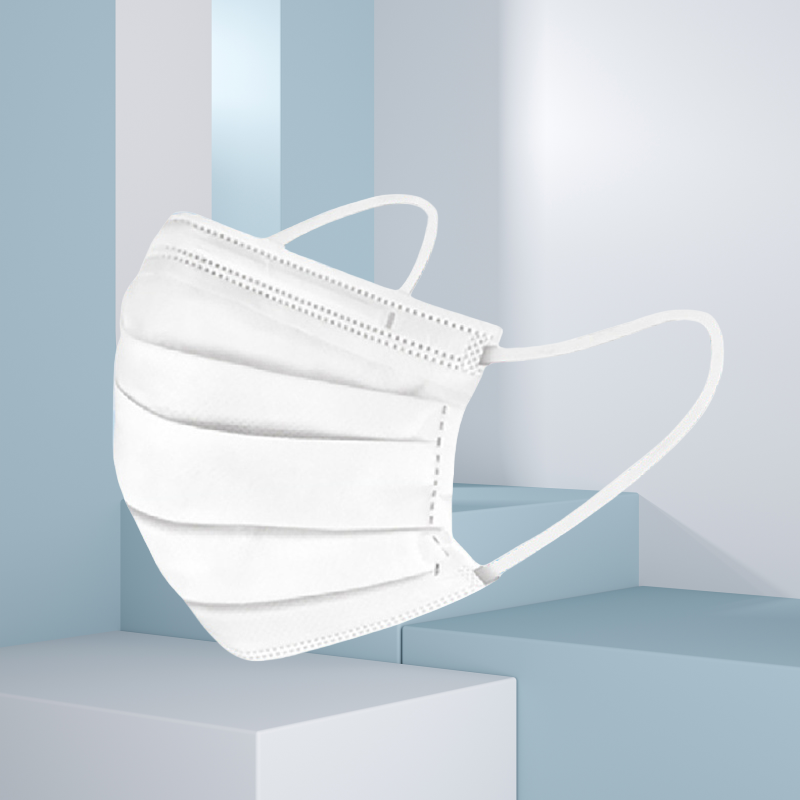
Most health experts and manufacturers agree on a specific window for disposable masks: four hours. But why this specific number? It isn't a random guess. It relates directly to human physiology and material science. When you breathe, you exhale moisture. Over time, this moisture accumulates within the layers of the mask.
As you wear a Surgical mask, your breath dampens the inner layer. This moisture does two things. First, it begins to collapse the delicate fibers that provide the electrostatic charge needed to trap tiny particles. Second, a wet mask becomes harder to breathe through. When resistance increases, air seeks the path of least resistance—usually through the gaps around your nose and cheeks rather than through the filter itself.
The four-hour rule assumes a moderate environment. However, certain conditions will force you to swap out your disposable masks much sooner:
High Humidity: If it is raining or you are in a tropical climate, the fibers saturate faster.
Physical Exertion: Heavy breathing during a workout or labor increases moisture output significantly.
Speech Intensity: Talking for long periods releases more respiratory droplets than sitting in silence.
Condition | Recommended Max Duration | Reason |
|---|---|---|
Quiet Office | 4 - 6 Hours | Low moisture buildup |
Busy Public Transport | 2 - 4 Hours | Higher risk, variable airflow |
Physical Exercise | 1 Hour (or when damp) | Rapid saturation |
Medical/Clinical Setting | Every Patient Visit | Cross-contamination prevention |
Not all disposable masks are created equal. The lifespan is heavily influenced by how they are built. Most high-quality options utilize a specific structure designed for layered protection.
The standard 3-ply non-woven mask consists of:
Outer Layer: A hydrophobic layer that repels fluids and water.
Middle Layer: The melt-blown filter—this is the "engine" of the mask.
Inner Layer: A soft, absorbent layer designed to soak up the moisture from your breath.
Because these layers are made of synthetic polymers like polypropylene, they aren't designed to be washed or scrubbed. Any attempt to "clean" them destroys the structural integrity.
Lately, we have seen a surge in Biodegradable disposable masks. While these are excellent for the environment, they often have different shelf lives and wear-time profiles compared to traditional plastics. Similarly, High filtration masks (like N95 or FFP2 variants) use thicker melt-blown layers. These can sometimes last longer (up to 8 hours) in non-clinical settings because they have more "surface area" for particles, but they remain strictly one-day-use items.
Waiting for a timer to go off isn't always the best strategy. You must be proactive in checking the state of your disposable masks. If any of the following occur, you must replace the mask immediately, regardless of how long you have been wearing it.
Check the straps and the nose bridge. A mask is only as good as its seal.
Broken Ear Loops: Even a small tear means the tension is gone.
Loose Nose Wire: If it no longer holds its shape, air will leak out the top, often fogging up glasses.
Fuzzing or Pilling: If the inner fabric looks "hairy," the fibers are breaking down. This can irritate your lungs and nose.
This is the most obvious sign. If you see dirt, makeup, or sweat stains, the mask is compromised. For Surgical grade gear, any splash of liquid—even coffee—means the hydrophobic outer layer has been tested and potentially breached. We always recommend carrying at least two spare disposable masks in a clean, sealed bag to handle these unexpected moments.
A common question is: "Can I wear it longer if I can still breathe easily?" Surprisingly, the answer is often no. Sometimes, a mask becomes easier to breathe through as it wears out because the fibers are stretching or thinning, allowing more unfiltered air to pass.
Quality manufacturers prioritize making Breathable masks that don't sacrifice safety. However, as the electrostatic charge fades, the "protection" part of the equation drops.
Test the Resistance: If the mask feels "suffocating" suddenly, it is likely saturated with moisture.
Monitor Skin Irritation: Prolonged wear can cause "maskne" or dermatitis. If your skin starts to itch or burn, it is a sign that the inner layer is holding too much bacteria and moisture.
Modern High filtration technology allows for thinner masks that protect just as well as older, thicker versions. However, users often mistake thinness for weakness. It is important to trust the certification (like ASTM levels for Surgical masks) rather than the "feel" of the fabric.
Strictly speaking, disposable masks are "single-use." However, during supply shortages, many people wonder about "rotating" masks. Is it safe?
Some studies suggest that if you are in a low-risk environment (like walking alone outdoors), you can let a mask sit in a paper bag for 72 hours. This allows the virus to die and the moisture to evaporate.
Note: This does not work for Surgical masks used in medical settings.
The Risk: Even if the virus is gone, the structural integrity of the 3-ply non-woven material continues to degrade every time you stretch the ear loops to put it on.
Never, under any circumstances, should you wash disposable masks in a machine or with soap. Soap destroys the electrostatic charge of the melt-blown layer instantly. It turns a High filtration device into a simple piece of porous cloth with huge holes at a microscopic level.
The "wear time" ends when the mask is safely in the bin. Incorrectly removing your mask can lead to "self-contamination," where you touch the dirty outer surface and then touch your face.
Wash your hands or use sanitizer first.
Unloop the straps from your ears without touching the front of the mask.
Fold the mask inward so the "dirty" side is hidden.
Drop it into a lined trash can.
Because most disposable masks are made of plastic, they don't break down easily. This is why the development of Biodegradable options is so vital for the future. If you are a high-volume user, look for brands that offer eco-friendly materials that maintain that critical 3-ply non-woven protection.
To ensure your disposable masks actually last for their intended 4-8 hours, you have to treat them well before they even touch your face. Improper storage is the leading cause of "premature mask failure."
Before you even put the mask on, it is vulnerable. If you keep a loose mask in your pocket or purse, it picks up lint, dust, and oils from your hands. This clogs the High filtration layer before you've taken a single breath through it.
Sealable Containers: Always keep your 3-ply non-woven masks in their original packaging or a dedicated clean Ziploc bag.
Avoid Heat: Storing masks in a hot car can cause the plastic fibers in the ear loops to become brittle, leading to snaps the moment you try to wear them.
Check the Expiration: Yes, masks expire! The electrostatic charge typically lasts 2-3 years. Check the box before you buy in bulk.
If you need to take a quick break to eat or drink, how you handle the mask determines if you can put it back on.
The "Chin Tuck" Error: Never pull your mask down to your chin. This contaminates the inside of the mask with bacteria from your neck.
The "Dangle" Method: Hanging the mask from one ear is also risky, as it can swing against contaminated surfaces.
Best Practice: If you take it off, place it on a clean paper towel with the "face-side" up, or put it back in your "rest bag." If it touches a dirty surface, it's time for a new one of your disposable masks.
Not all factories produce the same level of safety. When it comes to Surgical and 3-ply non-woven protection, the manufacturing environment is just as important as the design.
As a representative of the Kingstar factory, I can tell you firsthand that we take the "lifespan" of our products seriously. Our facility is not just a building; it is a high-tech hub of safety and innovation. We operate massive, ultra-clean workshops where we produce millions of disposable masks that meet rigorous international standards. Our strength lies in our integrated supply chain. Because we control the production of the High filtration melt-blown fabric ourselves, we can guarantee that every mask provides the full 4-8 hours of protection it promises.
We understand that you rely on these products for your life and the lives of your family. That is why Kingstar focuses on making masks that are not only safe but also incredibly Breathable. We use premium, skin-friendly materials that reduce the moisture buildup that usually shortens a mask's life. When you choose a mask from our factory, you are choosing decades of expertise, state-of-the-art machinery, and a commitment to global health. We don't just make masks; we build the shields that keep the world moving.
Q: Can I wear a disposable mask for a whole 8-hour work shift?A: It is risky. Unless you are in a very dry, low-activity environment and using a High filtration mask, we recommend changing it during your lunch break. A fresh mask at the 4-hour mark ensures maximum safety.
Q: Does wearing two masks make them last longer?A: No. "Double masking" might increase filtration, but it also increases heat and moisture buildup. This causes both disposable masks to saturate and fail faster than a single mask would.
: How do I know if my mask is actually "Surgical" grade?A: Look for the ASTM rating (Level 1, 2, or 3) or the EN14683 Type IIR marking. These certifications mean the mask has been tested for fluid resistance and bacterial filtration efficiency.
Q: Are breathable masks less effective?A: Not necessarily. A Breathable mask often uses higher quality, thinner fibers that allow air through while still trapping particles using physics (electrostatic attraction) rather than just a "tight weave."
Q: What should I do if my mask gets wet from rain?A: Replace it immediately. A wet 3-ply non-woven mask has virtually no filtration capacity left and will be very difficult to breathe through.