Views: 0 Author: Site Editor Publish Time: 2026-11-20 Origin: Site


Peanut gauze balls vs round gauze balls are commonly used medical gauze products that differ in shape, construction, handling characteristics, and intended applications. Peanut-shaped gauze balls are designed for more localized handling and may be used with surgical instruments in appropriate procedures, while round gauze balls are commonly used for fluid absorption, skin preparation, and general wound care. Their performance depends not only on shape but also on cotton quality, fabric density, folding structure, sterility, and packaging specifications. For hospitals, medical distributors, and wholesale buyers, understanding these differences helps identify suitable gauze products for different clinical and purchasing requirements. This article compares peanut and round gauze balls, explains their material specifications and medical applications, and outlines key considerations for bulk procurement.
Shape Dictates Function: Peanut gauze balls are engineered for precision tasks like blunt tissue dissection and targeted fluid control, whereas round gauze balls are optimized for general absorption, cavity packing, and wound cushioning.
Specification Matters: The choice between Type 13 (standard) and Type 17 (high-density) weaves determines the absorbency rate and linting risk during critical procedures.
Material Integrity: Woven medical-grade cotton gauze balls are structurally superior to standard cotton balls, which pose severe linting and fragmentation risks in sterile environments.
Safety and Compliance: For OR environments, radiopaque (X-ray detectable) elements are non-negotiable for both shapes to mitigate the risk of Retained Surgical Items (RSIs).
Procurement Strategy: Balancing sterile, ready-to-use packs against bulk non-sterile options requires aligning inventory with specific departmental workflows (e.g., surgical suites, trauma kits, or outpatient clinics).
Table of Contents
Clinical staff require specific tactile feedback and absorption profiles based on the anatomical site. A mismatched gauze shape leads to tissue trauma or inadequate hemostasis. Using a large, loose dressing in a narrow surgical corridor obstructs the surgeon's view. Conversely, using a small, dense gauze for massive fluid pooling wastes time and requires constant material swapping. Selecting the correct geometry prevents these operational bottlenecks. We see this daily in thoracic and neurosurgical suites where space is limited and precision is non-negotiable.
Surgical and advanced wound care environments prohibit standard loose cotton balls. Loose cotton lacks structural integrity. When saturated with blood or saline, standard cotton collapses and sheds microscopic fibers into the wound bed. These stray fibers trigger foreign body reactions, increase infection rates, and complicate the healing process. Granulomas often form around retained cotton fibers, requiring secondary interventions.
Woven gauze balls offer a structured textile construction that can help maintain product integrity during handling and fluid absorption. Proper folding and edge control may reduce loose fibers compared with some unstructured cotton products. However, linting performance and structural stability depend on the actual materials, manufacturing process, and product specifications. For surgical or other sensitive applications, buyers should review the manufacturer's intended use and relevant product quality information rather than assuming that all woven gauze balls are lint-free.
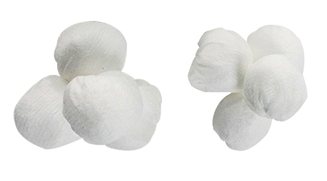
Peanut gauze balls are typically formed by folding and rolling medical gauze into a compact, elongated shape. Depending on the product design, the raw fabric edges may be folded inward to reduce fraying and loose fibers. The finished shape is intended to support localized handling, including use with suitable surgical instruments when the product is designed and approved for that purpose.
The manufacturing process follows strict mechanical steps to ensure consistency:
Raw gauze is cut to precise dimensions based on the target peanut size.
Automated folders tuck the frayed edges toward the center of the fabric.
High-tension rollers compress the folded gauze into a dense, elongated sphere.
A final quality check ensures no loose threads remain on the exterior.
The primary design intent of peanut gauze balls is attachment to surgical forceps. Scrub nurses load these firm spheres onto Kelly, Pean, or Kocher clamps. This setup gives the surgeon an extended reach into deep, narrow surgical cavities. The dense core provides excellent tactile feedback through the metal instrument. Surgeons use this feedback to manipulate tissues safely without direct hand contact.

Round gauze balls are formed into a compact, generally spherical shape using folded or rolled gauze. Their softness, density, and absorbency depend on the fabric specifications and manufacturing process. Depending on the product design, round gauze balls may be suitable for general fluid absorption, skin preparation, and other medical applications consistent with the manufacturer's intended use.
This design maximizes the surface area-to-volume ratio. The primary intent is rapid fluid absorption, wound prepping, and cavity packing. The softer exterior conforms easily to irregular wound beds. It provides excellent physical protection and cushioning for sensitive granulation tissue during the secondary healing phases. Nurses frequently use Foerster sponge forceps to handle these larger round variants during broad skin prepping.

Key Material Specifications That Affect Gauze Quality
Assessing the technical specifications differentiates true medical-grade gauze from commercial textiles. Clinical buyers must look beyond the basic shape. They must evaluate the raw material purity, the density of the weave, the sterilization method, and the inclusion of safety markers. These factors directly influence patient outcomes and operational efficiency.
High-quality gauze balls consist entirely of purified, bleached, 100% medical-grade cotton. The bleaching process removes natural oils and impurities from the raw cotton fibers. This purification maximizes biocompatibility and ensures rapid fluid uptake. Pure cotton offers superior capillary action, drawing exudate away from the wound bed efficiently.
Synthetic blends or low-quality cotton introduce significant clinical risks. Cotton, rayon, and polyester-based materials have different absorption and handling characteristics depending on their fiber properties, fabric construction, and finishing processes. Material suitability should be evaluated using the applicable product specifications and performance requirements. These residues can cause contact dermatitis or interfere with topical medications applied to the surgical site. Medical-grade cotton must pass strict USP (United States Pharmacopeia) standards for purity and pH balance.
The thread count, or mesh density, dictates the physical performance of the gauze. Medical facilities typically choose between two primary weave standards.
Specification | Type 13 Gauze | Type 17 Gauze |
|---|---|---|
Weave Density | Looser weave (approx. 19x15 mesh) | Tighter weave (approx. 24x20 mesh) |
Absorbency Rate | Moderate fluid uptake | Rapid, high-volume fluid uptake |
Tensile Strength | Lower, prone to tearing under tension | High, withstands aggressive tissue manipulation |
Linting Risk | Higher potential for fraying | Minimal linting |
Best Use Cases | Basic absorption, secondary dressings, external cleaning | Open wounds, surgical sites, precise fluid control |
Type 13 gauze features a looser weave. It is highly suitable for basic absorption tasks, secondary dressing layers, and cost-sensitive applications in general wards. Type 17 gauze utilizes a tighter weave with a higher thread count. This density provides superior absorbency and a significantly lower linting risk. Type 17 is mandatory for open wounds, deep cavity packing, and sterile surgical sites where material failure is unacceptable.
Sterile gauze comes pre-packaged in blister packs or peel-pouches. Manufacturers sterilize these products using ethylene oxide (EO) gas or gamma irradiation. Sterile gauze balls are used in procedures that require sterile medical supplies, including appropriate surgical and wound care applications. Their sterilization status must be supported by validated processes and suitable packaging. Sterility helps reduce the risk of introducing microorganisms during use but does not eliminate all sources of contamination.
Non-sterile gauze ships in bulk packaging. Facilities utilize non-sterile options for external wound cleaning, intact skin prepping, or secondary dressing layers. Hospitals may consider sterilizing suitable non-sterile gauze products in-house only when the product's intended use, material compatibility, validated sterilization procedures, and applicable regulations permit this practice. Buyers should not assume that all bulk non-sterile gauze balls are suitable for hospital sterilization. This requires strict internal validation to ensure steam penetration reaches the core of the tightly rolled gauze.
Invasive procedures require gauze with integrated radiopaque elements. Manufacturers weave a specialized thread containing barium sulfate into the cotton matrix. This thread appears clearly on X-ray imaging under fluoroscopy or standard radiography.
Radiopaque markers are a strict regulatory and safety necessity. If a surgical count is incorrect at the end of a procedure, the surgical team takes a portable X-ray of the patient. The barium sulfate thread instantly highlights any retained gauze on the scan. This feature applies equally to both peanut gauze balls and round gauze balls used in OR environments. Without this thread, a blood-soaked gauze ball is virtually indistinguishable from human tissue on an X-ray.
Mapping the specific gauze type to its optimal clinical use case prevents material waste and improves procedural speed. Different departments face unique fluid management and tissue handling challenges. The geometry of the gauze must align with these specific anatomical demands.
Surgeons utilize peanut gauze balls extensively for blunt dissection. Blunt dissection involves separating delicate tissue planes without using sharp scalpels or scissors. The surgeon clamps the peanut gauze in a forceps and gently sweeps it against the connective tissue. The firm, textured surface of the gauze pushes the tissue apart naturally. This technique minimizes incidental bleeding and protects adjacent nerves and blood vessels.
These compact gauze balls also excel at targeted hemostasis. In confined spaces like thoracic cavities or neurosurgical fields, standard sponges obscure the view. A clamped peanut gauze allows the surgeon to apply direct, pinpoint pressure to small, bleeding vessels. The high density of the rolled cotton absorbs the blood rapidly while keeping the surrounding surgical field visible. The firmness of the peanut shape transfers the mechanical pressure from the surgeon's hand directly to the bleeding source without collapsing.
Round gauze balls are the standard choice for prepping large surgical sites. Nurses soak these absorbent spheres in antiseptic solutions like povidone-iodine or chlorhexidine. The spherical shape holds a large volume of liquid. The nurse uses sponge forceps to paint the antiseptic over the patient's skin quickly and evenly, covering broad areas like the abdomen or thigh in seconds.
Round gauze balls may be used in certain wound care procedures for fluid absorption and localized dressing support. Their folded structure can provide a compact absorbent material for appropriate applications. However, deep wound packing and treatment of tunneling wounds require products specifically suitable for those purposes. Healthcare professionals should select sterile, appropriately designed materials according to the wound condition, clinical protocols, and the manufacturer's intended use.
Trauma kits require highly absorbent materials for rapid hemorrhage control. In emergency care, gauze products may be used for absorbing blood, wound coverage, and supporting appropriate bleeding-control procedures. Severe hemorrhage requires wound dressings and treatment methods selected according to established emergency care protocols. Standard round gauze balls should not automatically be considered substitutes for specialized wound-packing or hemostatic products.
It is important to contrast standard woven gauze balls with specialized hemostatic dressings used in severe trauma. While standard gauze relies purely on mechanical absorption and pressure, combat gauze contains active clotting agents like kaolin. EMS teams use standard round and peanut gauze for moderate bleeding and wound clearing, reserving hemostatic agents for massive arterial trauma where mechanical pressure alone is insufficient.
Specialized fields frequently utilize both shapes due to restricted anatomical spaces. Dental surgeons use small round gauze balls for saliva control and bite pressure after extractions. Ear, Nose, and Throat (ENT) specialists rely on miniature peanut gauze balls to pack nasal cavities or manage bleeding during tonsillectomies. Ophthalmic procedures demand ultra-pure, lint-free variations of these shapes to absorb fluids without leaving debris on the corneal surface, which could cause severe post-operative irritation.

Supply chain managers must weigh clinical needs against operational budgets. Selecting medical consumables is not merely a purchasing exercise; it is a clinical risk management strategy. Procurement teams must evaluate performance, scalability, and supplier reliability to build a resilient inventory.
Specialized peanut gauze balls carry a cost premium compared to the commoditized pricing of standard round gauze balls. The intensive folding and rolling process required to create the dense peanut core increases manufacturing time. However, buying only the cheaper round gauze creates hidden costs.
Using the wrong gauze increases procedure time. If a surgeon struggles to perform blunt dissection with a soft round gauze, the OR clock keeps ticking. OR time is exceptionally expensive. Additionally, using low-density gauze in a high-fluid environment requires using more units per procedure. The higher risk of lint contamination from cheap gauze can lead to post-operative infections, drastically increasing patient care costs. The initial cost premium of the correct gauze shape easily offsets these downstream expenses.
Hospitals constantly battle SKU bloat. Managing hundreds of slightly different gauze variations complicates ordering and storage. Supply chain leaders need strategies for inventory standardization.
Consolidating to a single, high-quality Type 17 round gauze ball makes sense for general wards, outpatient clinics, and minor procedure rooms. It simplifies the supply chain and leverages bulk purchasing discounts. However, maintaining distinct inventories is mandatory for surgical suites and EMS. The OR must have access to radiopaque peanut gauze balls. Attempting to standardize OR supplies with general ward supplies compromises surgical safety and frustrates clinical staff.
When evaluating medical gauze suppliers, buyers should review the manufacturer's quality management system, product specifications, and applicable regulatory documentation. ISO 13485 certification can provide evidence of a quality management system designed for medical devices, but it does not independently establish product-specific regulatory compliance. For the US and European markets, buyers should verify the requirements applicable to the specific gauze product, including its intended use, device classification, labeling, and conformity documentation. Relevant test reports and sterilization validation records should also be reviewed when applicable.
Buyers should request documented quality control metrics. This includes testing for bioburden levels, cotton purity, and linting standards. Reliable suppliers provide batch-level traceability. This ensures that every box of gauze meets the exact specifications required for safe clinical use. A robust supplier will readily provide Certificates of Conformance (CoC) for every shipment.
Identifying operational vulnerabilities associated with gauze procurement prevents clinical errors. Supply chains face risks from both product usage in the OR and macro-level sourcing challenges.
Small items like peanut gauze balls are easily lost in deep anatomical cavities. A blood-soaked gauze ball blends in perfectly with surrounding human tissue. A Retained Surgical Item (RSI) is a catastrophic event that leads to severe patient harm, emergency revision surgery, and massive legal liability.
Mitigation requires a multi-layered approach. Hospitals must mandate radiopaque threads for all OR gauze without exception. Surgical teams must implement strict sponge-counting protocols. The circulating nurse and scrub tech count all items before the incision, before cavity closure, and at the end of the procedure. Many modern facilities now utilize barcode-assisted tracking systems. Nurses scan each gauze pack as it enters the sterile field, ensuring a perfect digital count and eliminating human error during high-stress procedures.
Relying on single-source overseas vendors exposes the hospital to shipping delays and quality fade. Quality fade occurs when a manufacturer slowly degrades product specifications over time to increase margins. A hospital might order Type 17 gauze but quietly receive looser Type 13 gauze in later shipments. Synthetic substitutions might replace pure cotton.
Establishing dual-sourcing strategies mitigates this risk. Hospitals should approve at least two independent manufacturers for critical consumables. Procurement teams must require batch-level Certificates of Analysis (CoA) with every delivery. Finally, supply chain managers should conduct periodic clinical audits. They must ask OR nurses and surgeons to evaluate the tactile feel, absorbency, and linting performance of the current gauze inventory to catch quality fade early.
Peanut gauze balls are indispensable, precision instruments for surgical dissection and targeted hemostasis. Round gauze balls remain the versatile standard for high-volume absorption, wound cushioning, and trauma prepping. Surgical centers and specialized ORs must prioritize radiopaque peanut gauze balls and Type 17 round gauze balls. Outpatient clinics and general wards can optimize costs safely by stocking standard Type 13 round gauze balls for routine care.
Audit your current OR gauze usage to identify any mismatched applications or excessive SKU bloat.
Consult with surgical department heads to determine their specific tactile preferences for blunt dissection tools.
Request sterile samples of both Type 13 and Type 17 weaves from vetted manufacturers for hands-on clinical evaluation.
Verify that all current gauze contracts explicitly mandate radiopaque threads for invasive procedure inventory.
A: Surgeons use peanut gauze balls primarily for blunt tissue dissection and fluid management in tight anatomical spaces. Scrub nurses clamp these firm, tightly rolled spheres into forceps. The surgeon then uses the instrument to separate delicate tissue planes safely without cutting, and to apply targeted pressure to small bleeding vessels.
A: Woven gauze balls maintain their structural integrity when wet. Standard loose cotton balls collapse and shed microscopic fibers into the wound when saturated. Using woven peanut gauze eliminates this severe linting risk, preventing foreign body reactions and keeping the sterile surgical field clean.
A: The difference lies in thread count and weave density. Type 13 has a looser weave, making it suitable for basic absorption and secondary dressings. Type 17 features a tighter weave and higher thread count. It offers superior absorbency and minimal linting, making it ideal for open wounds and surgery.
A: No, not all peanut gauze balls are radiopaque. While highly recommended and often mandatory for surgical environments, buyers must specifically verify the presence of X-ray detectable (barium sulfate) threads when ordering. Non-radiopaque versions exist for external or non-invasive clinic use.
A: Facilities purchase non-sterile bulk round gauze for external wound cleaning, intact skin prepping, or secondary dressing layers. Hospitals with in-house central sterile services departments (CSSD) also buy non-sterile bulk gauze to package and autoclave themselves, which helps control overall inventory costs.
A: Yes. Round gauze balls are excellent for managing heavy exudate and protecting tissue in deep or tunneling wounds. Their soft, pliable shape conforms easily to irregular wound cavities. However, the gauze must be sterile and structurally sound (woven) to prevent linting inside the wound bed.
A: Manufacturers use specific folding and rolling techniques during production. Machines fold the raw, cut edges of the gauze inward before rolling it into a sphere or peanut shape. This tucking process secures the raw edges internally, ensuring a smooth exterior surface that resists fraying and linting.