Views: 0 Author: Site Editor Publish Time: 2026-11-20 Origin: Site


Isolation gowns are essential personal protective equipment used in healthcare settings to help protect medical staff from exposure to blood, body fluids, and potentially infectious materials. Choosing the right isolation gown specifications requires understanding the ANSI/AAMI PB70 protection levels, fabric materials, barrier performance, and applicable testing requirements. Common materials include spunbond polypropylene (SPP), SMS nonwoven fabric, and polyethylene (PE)-coated materials, each offering different levels of breathability, fluid resistance, and wearing comfort. For hospitals, medical distributors, and bulk purchasing teams, evaluating material construction, seam quality, protection levels, and product documentation is important when selecting suitable gowns. This guide explains isolation gown materials, AAMI protection classifications, standardized testing methods, and key supplier evaluation factors to support informed purchasing decisions.
Standardized Protection: The ANSI/AAMI PB70 standard establishes four distinct levels of liquid barrier protection; selecting the incorrect level either exposes staff to biohazards or wastes budget on over-specification.
Material Science: Fabric composition—such as SMS (Spunbond-Meltblown-Spunbond) or Polyethylene-coated materials—directly dictates the balance between breathability, durability, and fluid resistance.
Mandatory Validation: Rigorous testing standards (AATCC 42, AATCC 127, ASTM F1670, ASTM F1671) validate manufacturer performance claims and are mandatory for FDA 510(k) clearance.
Table of Contents
Establishing the baseline criteria for success requires matching protective garment capabilities to anticipated fluid exposure and pathogen risks. The recognized ANSI/AAMI PB70 consensus standard provides the definitive classification system for liquid barrier performance. This framework eliminates guesswork by categorizing garments into four distinct tiers based on empirical testing data. Facilities cannot simply purchase generic apparel; they must align their inventory with these specific performance tiers to maintain compliance and protect their workforce.
To properly implement the PB70 framework in your facility, follow these steps:
Audit the specific clinical procedures performed in each department.
Quantify the expected volume and velocity of fluid exposure for those procedures.
Identify the pathogen risk profile associated with the patient population.
Match the highest anticipated risk to the corresponding AAMI level.
Standardize procurement around that specific level to prevent inventory mixing.
Level 1 garments provide the foundational tier of barrier protection. Target use cases include basic patient care, standard contact isolation, and cover garments for facility visitors. The performance criteria demand a slight barrier to small amounts of fluid penetration. These garments undergo testing specifically for water impact resistance. They do not offer protection against sustained fluid pressure or heavy splashing. Facilities utilize Level 1 garments primarily for routine interactions where the probability of encountering blood or infectious bodily fluids remains exceptionally low. The material acts as a simple physical shield against dry particulates and minor, accidental fluid contact.
Level 2 garments step up the protective barrier for more involved clinical tasks. Target use cases cover routine blood draws, basic suturing, intensive care unit monitoring, and pathology laboratory work. The performance criteria require resistance to water penetration under low pressure and minor splashing. This tier offers significantly greater water-penetration resistance than Level 1 under specified AATCC tests. The fabric must withstand both impact and static hydrostatic pressure. Level 2 garments serve as the standard workhorse for many hospital departments. They offer a reliable balance between fluid resistance and daily wearer comfort, allowing staff to perform standard procedures without risking strike-through from minor spills.
Level 3 garments address scenarios where fluid exposure is highly probable and potentially forceful. Target use cases involve arterial blood draws, inserting intravenous lines, emergency room trauma assessments, and handling heavy fluid volumes in burn units. The performance criteria mandate strict resistance to water penetration under moderate pressure and larger fluid volumes. These garments must pass rigorous hydrostatic pressure thresholds. Level 3 gowns must meet the specified water impact and hydrostatic pressure testing requirements, providing a higher level of liquid barrier resistance than Level 2 gowns. Actual protection also depends on the gown's overall construction, including its seams and critical coverage areas.
Level 4 represents the highest tier of non-surgical barrier protection. Target use cases include pathogen resistance, infectious disease management, massive trauma resuscitation, and rigorous chemical decontamination protocols. Level 4 represents the highest barrier performance category under ANSI/AAMI PB70 and includes testing for resistance to viral penetration using the ASTM F1671 method. These garments require long sleeves and frequently feature reinforced areas in critical zones, specifically the chest and forearms, to withstand heavy, sustained fluid exposure. Level 4 garments must pass stringent viral penetration testing. This proves that even microscopic pathogens cannot breach the material under pressure. Staff wearing Level 4 protection can operate confidently in the most hazardous clinical environments.
Analyzing the physical materials used to construct these garments reveals how manufacturers meet strict isolation gown performance metrics. Fabric engineering dictates the ultimate success or failure of the protective barrier. You cannot evaluate a garment without understanding the underlying polymer science and manufacturing techniques used to create the fabric web.
Spunbond Polypropylene represents the most basic non-woven fabric used in medical garments. Characteristics include a highly lightweight profile and exceptional breathability. The production process involves extruding melted polypropylene into continuous filaments. Manufacturers lay these filaments down on a moving belt and thermally bond them together using heated calendar rolls. However, severe limitations exist regarding fluid resistance. SPP offers minimal barrier protection against liquids. Fluids can easily pass through the porous structure of a single spunbond layer. SPP is commonly used in lightweight disposable protective garments and basic cover gowns. However, its suitability for a specific AAMI protection level must be confirmed through the required barrier performance testing rather than determined by the fabric type alone.
SMS fabric revolutionizes medical garment construction by sandwiching different material layers together. The meltblown center layer acts as a highly efficient microscopic filter and fluid barrier. The spunbond outer layers provide necessary structural strength, abrasion resistance, and durability. This tri-layer architecture balances moderate fluid resistance with acceptable thermal comfort for extended wear. SMS fabrics are widely used in medical isolation gowns because their layered construction can balance fabric strength, breathability, and fluid resistance. The final protection level depends on the material specifications, garment construction, and test results. The thickness and density of the meltblown layer determine the final hydrostatic pressure resistance. Thicker SMS variants provide excellent protection while allowing water vapor to escape, mitigating heat stress during long shifts.
When complete fluid impermeability is required, manufacturers turn to film laminates. These materials consist of a non-woven fabric base laminated with a Polyethylene (PE) film to create an absolute impervious barrier. Microporous variants use a specialized film containing microscopic pores large enough to allow vapor transmission but small enough to block liquid water and viral particles. PE-coated and microporous materials can be used in high-barrier protective garments. However, Level 4 classification must be supported by the applicable viral penetration test results rather than assumed from the coating or film structure alone. The primary trade-off involves thermal regulation. PE-coated garments significantly reduce breathability, trapping body heat and moisture inside the suit. This increases the risk of severe heat stress and physiological fatigue during prolonged use in high-risk environments.
Evaluating woven polyester and cotton blends against single-use synthetics requires a comprehensive logistical assessment. Reusable garments demand rigorous laundering lifecycles, precise sterilization protocols, and continuous tracking logistics. You must monitor the degradation of barrier properties over time. Repeated washing and chemical exposure break down the fabric's fluid resistance, eventually rendering the garment unsafe. Single-use synthetic garments eliminate these degradation concerns, ensuring baseline performance straight out of the package. However, disposable materials require dedicated storage space and strict waste management protocols for contaminated disposal. Facilities must weigh the operational burden of a laundry program against the continuous supply chain demands of disposables.
Material Type | Breathability | Fluid Resistance | Typical AAMI Level | Primary Clinical Use Case |
|---|---|---|---|---|
Spunbond Polypropylene (SPP) | High | Low | Level 1 | Basic patient care, visitor cover |
Standard SMS Tri-layer | Moderate | Moderate | Level 2 | ICU monitoring, routine blood draws |
Heavyweight SMS | Low-Moderate | High | Level 3 | Emergency room, trauma assessment |
PE Coated / Microporous Film | Very Low | Impervious | Level 4 | Viral outbreaks, massive trauma |
Empirical testing provides the authoritative lens through which performance specifications are validated. Regulatory bodies rely on standardized methodologies to ensure consistency and safety across the industry. You cannot trust marketing claims; you must demand raw laboratory data.
The AATCC 42 standard measures the resistance of fabrics to the liquid penetration of water by impact. The testing apparatus consists of a funnel equipped with a specialized nozzle. Technicians mount the fabric at a 45-degree angle exactly 0.6 meters below the nozzle. They pour 500 milliliters of distilled water through the funnel, allowing it to impact the fabric surface. A pre-weighed piece of blotter paper sits directly beneath the test material. After the water finishes draining, technicians weigh the blotter paper again to determine exactly how much water penetrated the barrier. This test simulates fluid splashing or spraying against the garment. Certification requires passing this impact test for AAMI Levels 1, 2, and 3. For Level 1 compliance, the blotter paper cannot gain more than 4.5 grams of weight. Level 2 and Level 3 garments must restrict penetration to 1.0 gram or less.
The AATCC 127 standard measures the resistance of fabrics to liquid penetration under static hydrostatic pressure. This test utilizes a hydrostatic head tester. Technicians clamp a 100 square centimeter sample of the fabric over a water well. The machine steadily increases the water pressure against the underside of the fabric at a rate of 60 millibars per minute. An observer watches the top surface of the fabric. The test concludes the moment three distinct droplets of water penetrate the material. This evaluates how well the material holds back fluid under continuous force, simulating a wearer leaning against a wet surface. AAMI Levels 2 and 3 require strict compliance with this standard. Level 2 garments must withstand at least 20 centimeters of hydrostatic pressure. Level 3 garments must hold back at least 50 centimeters of pressure.
High-risk environments require advanced penetration testing. ASTM F1670 evaluates the resistance of materials to synthetic blood under continuous liquid contact and pressure. Technicians place the fabric in a test cell and apply the synthetic blood under 13.8 kilopascals of pressure for one minute, followed by a 54-minute observation period at ambient pressure. If no visual penetration occurs, the material passes. ASTM F1671 follows the exact same pressure protocol but replaces the synthetic blood with a nutrient broth containing the Phi-X174 bacteriophage. Phi-X174 is used as a bacteriophage challenge organism in ASTM F1671 to evaluate a material's resistance to penetration by blood-borne pathogens under specified test conditions. After the test cycle, technicians swab the non-exposed side of the fabric and culture it. If any bacteriophage colonies grow, the fabric fails. Passing the applicable ASTM F1671 test is a key requirement for demonstrating Level 4 viral penetration resistance under ANSI/AAMI PB70.
FDA requirements for medical gowns depend on the product's intended use and regulatory classification. Non-surgical isolation gowns intended for minimal or low-risk situations are generally Class I devices exempt from 510(k) premarket notification, while surgical gowns and surgical isolation gowns are Class II devices that generally require 510(k) clearance. Buyers should distinguish between FDA establishment registration, device listing, and 510(k) clearance when reviewing supplier documentation.
For procurement verification, request the manufacturer's product specifications, applicable barrier performance test reports, labeling information, and regulatory documentation. Check relevant device listings and clearance records through the official FDA database when applicable. Laboratory reports should identify the tested material or garment, testing method, laboratory information, and relevant test results. ISO/IEC 17025 accreditation can provide additional confidence in laboratory competence, but the scope of accreditation should also be checked.
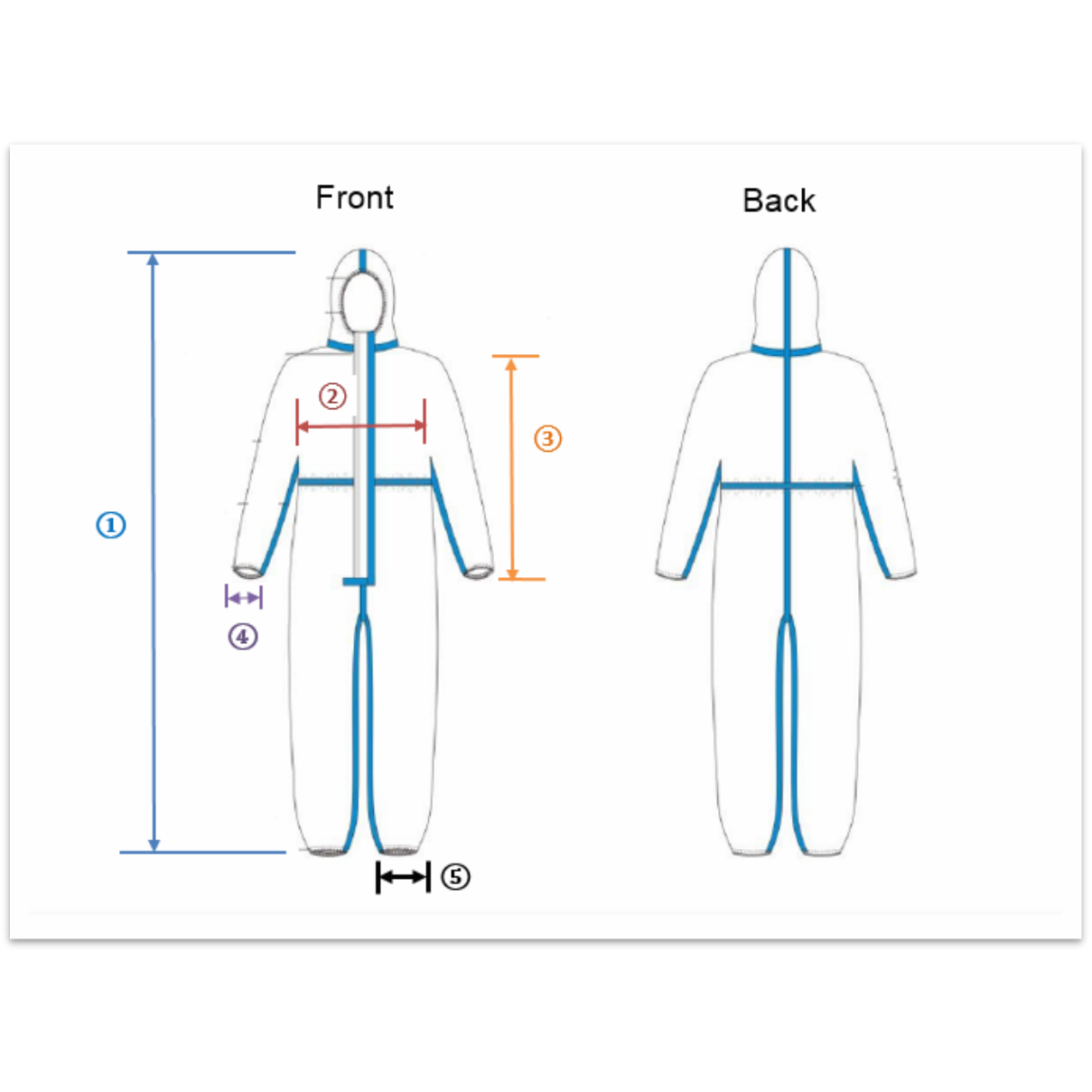
Translating technical specifications into actionable bulk buying criteria ensures that theoretical protection matches real-world clinical needs. You must evaluate the physical construction of the garment just as rigorously as the fabric material.
Material specifications become entirely irrelevant if the garment's seam construction fails under stress. Seam construction plays an important role in maintaining the overall barrier performance of an isolation gown. Stitched seams may create needle holes that require careful evaluation, particularly in areas exposed to fluids. Heat-sealed and ultrasonically welded seams are commonly used to reduce potential leakage paths by joining fabric layers without conventional stitching. However, the suitability of any seam construction should be confirmed through applicable barrier performance testing. Buyers should also check whether seams and critical garment areas meet the protection level claimed by the manufacturer. Heat-sealed seams melt the fabric layers together, eliminating needle holes entirely. Ultrasonically taped seams use high-frequency vibrations to fuse the materials, covered by a waterproof tape. You must also evaluate the presence of reinforced zones on the chest and sleeves. These critical areas face the highest exposure in high-risk environments. Reinforced panels provide an extra layer of heavy-duty film or dense SMS fabric to prevent strike-through during trauma care or heavy fluid procedures.
Garment ergonomics directly impact clinical safety and protocol adherence. Evaluate the inclusion of thumb loops, which prevent sleeves from riding up and exposing the wrists during active movement. Assess the quality of knit cuffs for comfort and glove compatibility. Compare neck closures carefully; tape or hook-and-loop closures often provide a more secure and adjustable fit than traditional ties. Assess back coverage options, comparing full overlapping coverage against open back designs. Proper ergonomics ensure safe removal without self-contamination. Doffing is the most vulnerable moment for healthcare workers. Poor fit or complicated closures can make gown removal more difficult and increase the risk of accidental contact with contaminated surfaces during doffing. Buyers should evaluate garment sizing, closure design, and ease of removal to support proper PPE use and reduce the risk of self-contamination.
Procurement requires assessing supply chain reliability before finalizing bulk contracts. Assess batch-to-batch consistency by requesting samples from different production runs. Demand raw material sourcing transparency to ensure the manufacturer is not substituting inferior fabrics during supply shortages. Evaluate packaging efficiency; vacuum-packed garments significantly optimize your storage footprint compared to loosely folded alternatives. Finally, confirm exact lead times for bulk acquisition to prevent critical inventory shortages during localized outbreaks or sudden spikes in patient volume. A reliable supplier must demonstrate the manufacturing capacity to scale production rapidly without compromising quality control standards.
Real-world challenges frequently complicate the deployment of protective garments at scale. Identifying these risks early allows safety officers to implement effective mitigation strategies before an exposure incident occurs.
The influx of counterfeit PPE introduces severe clinical risks to frontline staff. Fake garments often mimic the visual appearance of high-level protection while utilizing inferior, porous materials. Fraudulent manufacturers often forge ISO 17025 laboratory reports. They copy legitimate report numbers and alter the manufacturer name. Mitigate this critical risk by aggressively cross-referencing supplier claims with the FDA database. Always demand independent, third-party laboratory test results before accepting a shipment. Do not rely solely on in-house manufacturer testing certificates. Contact the testing laboratory directly. Provide the report number and ask them to verify the client name and the specific material tested to confirm the results match the physical product you are purchasing.
Heat stress drives unauthorized protocol deviations. When staff overheat in non-breathable garments, they experience physiological fatigue, heavy sweating, and cognitive decline. They may improperly unfasten neck closures or tear the fabric to increase airflow, immediately compromising their safety. Mitigate this by avoiding the over-specification trap. Do not mandate heavy Level 4 garments for basic Level 2 tasks. Match the breathability of the garment to the actual clinical risk. Provide frequent rotation schedules and cooling stations for staff required to wear impervious Level 4 suits for extended durations. Educate staff on the specific reasons why a heavier garment is required for certain procedures to increase voluntary compliance.
During high-stress emergencies, clinical staff may quickly grab inadequate protection if storage areas are disorganized. Mixing Level 1 and Level 4 garments in the same supply bin guarantees eventual exposure incidents. A nurse rushing to a trauma bay might grab a Level 1 SPP garment by mistake, resulting in massive fluid strike-through. Mitigate this risk by implementing clear visual management systems. Color-coding garments or their packaging by AAMI level prevents dangerous selection errors. Establish strict inventory segregation. Ensure that high-risk trauma bays only stock Level 3 and Level 4 garments, while basic triage areas stock appropriate lower-level options. Conduct weekly audits of supply rooms to verify that stock has not been mixed by environmental services staff.
Conduct an internal audit of current clinical risk profiles to identify exact fluid exposure probabilities across different departments.
Request comprehensive technical data sheets from prospective vendors to perform side-by-side material and testing comparisons.
Initiate a controlled clinical trial with frontline staff to evaluate usability, donning efficiency, and thermal comfort.
Establish a visual color-coding system in your supply rooms to prevent dangerous garment selection errors during high-stress emergencies.
A: Surgical gowns focus protection on the front of the body and arms for sterile fields. The back is often non-protective. An isolation garment requires 360-degree protection. It shields healthcare workers from broader exposure to infectious materials, splashes, and contaminated surfaces across various non-surgical clinical settings, ensuring the wearer's entire torso and arms remain protected.
A: You must request independent laboratory test reports directly from the manufacturer. Verify passing results for AATCC 42 and AATCC 127 for lower-level garments. For Level 4 protection, demand passing results for ASTM F1670 and ASTM F1671. Always cross-check the testing facility's ISO 17025 credentials and contact the lab to ensure the report's authenticity.
A: SMS stands for Spunbond-Meltblown-Spunbond. It is an engineered tri-layer non-woven fabric. The outer spunbond layers provide structural durability, abrasion resistance, and physical strength. The inner meltblown layer acts as a dense, microscopic fluid filter. This combination provides highly breathable, moderate fluid resistance, making it the industry standard for Level 2 and Level 3 clinical environments.
A: No. Level 4 is specifically required for high-fluid, high-pathogen risk scenarios, such as viral outbreaks, massive trauma cleanup, or handling highly infectious agents. Lower levels often suffice for basic, low-fluid cleaning tasks or routine room turnover. Always align the garment choice with your specific facility infection control protocols and anticipated fluid exposure.
A: The shelf life of a disposable isolation gown depends on the manufacturer's specifications, material composition, packaging, and storage conditions. Buyers should check the expiration date or shelf life stated on the product labeling and follow the manufacturer's storage instructions. Gowns should be stored in a clean, dry environment away from direct sunlight, excessive heat, and moisture. Before use, inspect the packaging and garment condition to identify any visible damage or deterioration. Do not assume that all disposable isolation gowns have the same shelf life.
A: FDA clearance requires comprehensive documentation. Manufacturers must submit biocompatibility testing to ensure the material does not cause skin irritation. They must provide physical performance testing, including tensile strength and tear resistance metrics. Finally, they must submit specific barrier performance testing results (AATCC or ASTM) that definitively validate their claimed AAMI protection level.