Views: 0 Author: Site Editor Publish Time: 2026-11-20 Origin: Site


wholesale gauze swabs are widely supplied to hospitals, clinics, medical distributors, and wound care product brands. Available in different sizes, ply counts, mesh densities, and sterile or non-sterile packaging, these products are used for wound cleaning, dressing, and other clinical applications. For bulk buyers, selecting suitable specifications and verifying supplier quality are essential to maintaining consistent product performance and reliable supply.
This guide covers common gauze swab specifications, packaging options, OEM customization requirements, and key considerations for wholesale purchasing.
Specification Alignment: The most common clinical requirements dictate 8-ply or 12-ply constructions in standard dimensions (5x5 cm, 7.5x7.5 cm, 10x10 cm, and 10x20 cm), though applications range from 4-ply for light duty to 16-ply for high-exudate management.
Safety and Construction: Surgical applications necessitate specialized features like X-ray detectable threads and folded edges to prevent linting and retained surgical items (RSIs).
Sterility and Packaging: Procurement decisions must account for the distinct packaging and sterilization requirements (EO gas vs. Gamma irradiation) of sterile swabs versus the bulk packaging of non-sterile variants.
Regulatory Baselines: Viable OEM partners must demonstrate compliance with international pharmacopeia standards (USP Type VII, BP) and hold verifiable quality management certifications (ISO 13485, CE, FDA registration).
OEM Evaluation: Successful wholesale sourcing relies on assessing a manufacturer’s capacity for custom mesh configurations, private labeling, and consistent batch-to-batch quality control.
Table of Contents
Establish baseline requirements for bulk gauze procurement before you engage manufacturers. This prevents costly misalignments between what your clinical staff needs and what the factory actually produces. Hospital networks and medical distributors often initiate procurement cycles based on historical purchasing data rather than current clinical demands. This disconnect leaves you with a surplus inventory of inadequate materials or severe shortages of specialized surgical dressings. Procurement teams must define exact physical tolerances, absorbency minimums, and packaging formats prior to requesting manufacturer samples. If you fail to lock in these parameters early in the sourcing phase, you force buyers to evaluate disparate OEM proposals. Objective quality comparisons become impossible. A rigid specification framework ensures all prospective manufacturing partners bid on identical product standards. You need to know exactly what you are buying before you ask for a quote.
Map your intended use cases directly to material properties to guarantee optimal performance in clinical settings. General wound dressing requires high breathability and moderate absorbency. Standard 100% cotton constructions handle this perfectly. Surgical preparation demands rapid fluid uptake and absolute structural integrity under mechanical stress. Synthetic blends or non-woven alternatives sometimes substitute traditional woven cotton, but pure cotton remains the global standard for heavy exudate management due to its natural capillary action. Procurement specialists evaluate absorbency rates, measured in seconds, to determine how quickly a swab draws fluid away from the wound bed. A standard requirement is a sinking time of less than 10 seconds. Matching the physical properties of the yarn to the specific clinical application minimizes material waste and enhances patient outcomes.
Differentiating standard wound care swabs from surgical swabs is a primary safety protocol in medical procurement. X-ray detectable gauze swabs contain a radiopaque element, commonly made with barium sulfate, that can help medical teams locate a misplaced swab during procedures requiring surgical item tracking. These swabs are often specified for invasive surgical applications as part of retained-item prevention protocols. RSIs are severe clinical errors that lead to patient complications and massive liability. Standard gauze swabs do not contain an X-ray detectable element. Their suitability depends on the intended clinical use, sterility, and applicable hospital procedures. Buyers should confirm whether X-ray detectable construction is required before ordering products for surgical use. You must separate these SKUs entirely in your inventory management system.
Identifying non-negotiable certifications filters out substandard manufacturing facilities immediately. Medical gauze swabs must meet the quality and regulatory requirements applicable to their intended use and destination market. Buyers should review relevant product standards, material test reports, and the manufacturer's quality management documentation. ISO 13485 certification can demonstrate that a manufacturer operates a medical device quality management system, but it does not replace product-specific regulatory requirements. For the US and EU markets, buyers should verify the applicable FDA registration, listing, and premarket requirements or EU MDR conformity documentation, as appropriate.
Follow these steps to verify supplier compliance:
Request the manufacturer's current ISO 13485 certificate and verify the expiration date.
Verify the relevant FDA establishment registration and device listing, or review EU conformity documents and notified body certificates where applicable.
Demand recent third-party laboratory test reports confirming USP Type VII or BP compliance for yarn purity.
Review the factory's internal audit logs for the past 12 months to identify any recurring non-conformances.
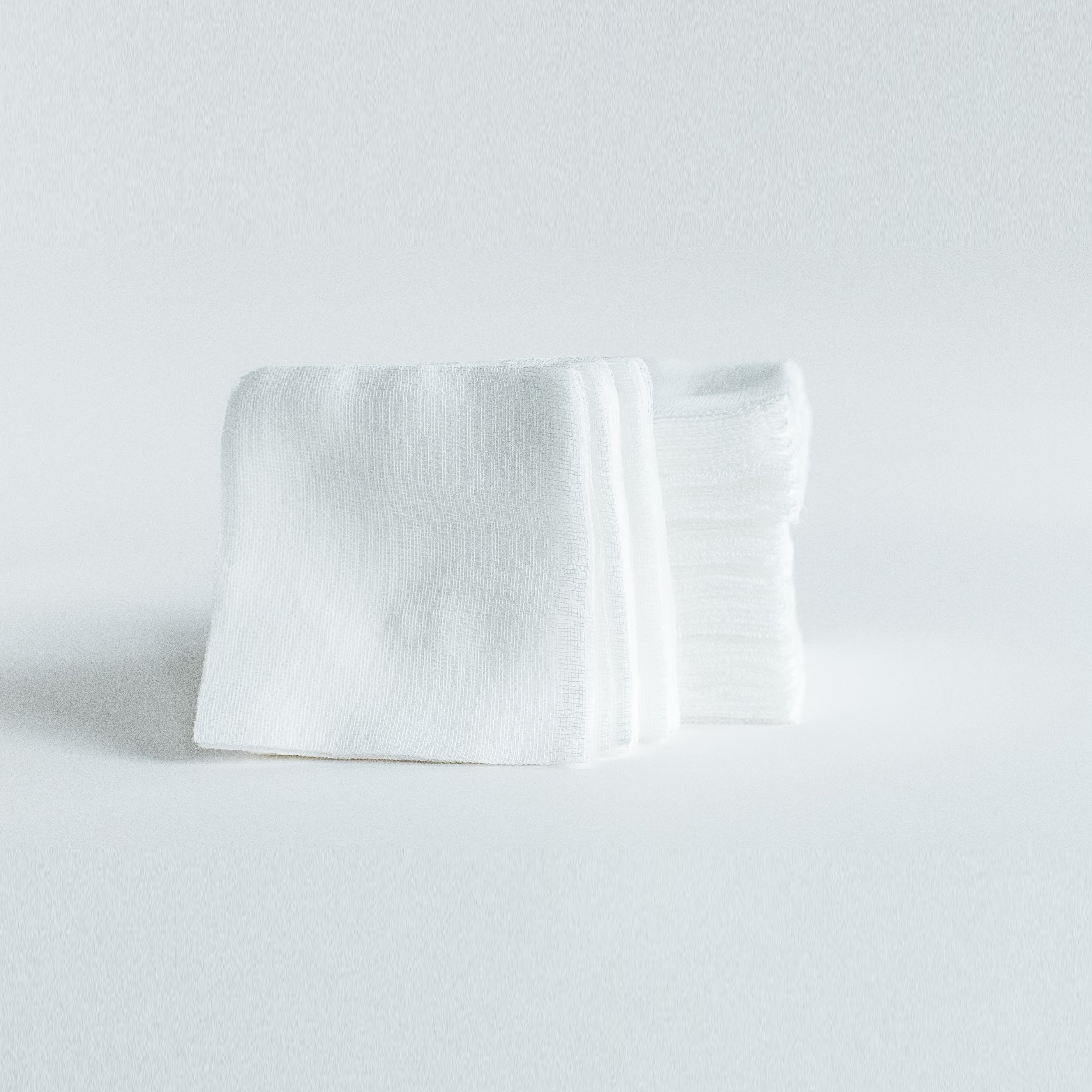
Industry-standard dimensions dictate the vast majority of global medical supply orders. Manufacturers cut and fold raw gauze rolls into specific geometric profiles designed for targeted clinical indications. Standardization across these sizes allows healthcare providers to maintain predictable inventory levels and ensures compatibility with standard surgical trays and first aid kits. When you order wholesale gauze swabs, you will primarily deal with four core sizes.
Imperial Size | Metric Size | Primary Clinical Indication | Typical Setting |
|---|---|---|---|
2 x 2 inches | 5 x 5 cm | Minor abrasions, IV site prep, pediatric care | Outpatient clinics, phlebotomy labs |
3 x 3 inches | 7.5 x 7.5 cm | Moderate wound dressing, secondary absorption | Emergency rooms, general practice |
4 x 4 inches | 10 x 10 cm | Primary surgical dressing, heavy exudate management | Operating rooms, trauma centers |
4 x 8 inches | 10 x 20 cm | Large surgical incisions, orthopedic wrapping | Specialized surgery, burn units |
Analyzing the trade-offs between ply count, physical thickness, and fluid retention guides accurate purchasing decisions. Ply refers to the number of individual fabric layers folded together to create the final swab. An 8-ply construction provides a baseline level of cushioning and absorption suitable for routine cleaning and secondary dressings. A 12-ply configuration significantly increases the fluid holding capacity. This makes it the dominant choice for moderate to heavy bleeding and standard surgical procedures.
Lower ply counts, such as 4-ply, serve cosmetic applications, light topical ointment application, or automated surface wiping where high absorbency remains unnecessary. Conversely, 16-ply constructions manage severe trauma wounds and high-exudate surgical sites. Specifying the correct ply count prevents overspending on unnecessary material thickness while ensuring clinical efficacy.
Ply Count | Fluid Retention Capacity | Best Use Case |
|---|---|---|
4-Ply | Low | Ointment application, surface wiping, cosmetic use |
8-Ply | Moderate | Basic wound cleaning, secondary dressings, IV prep |
12-Ply | High | Surgical procedures, moderate exudate, trauma care |
16-Ply | Maximum | Heavy bleeding, deep cavity packing, severe trauma |
Edge design directly impacts patient safety and wound healing trajectories. Manufacturers produce swabs with either raw, unfolded edges or mechanically folded edges, often referred to as a French fold. Unfolded edges leave microscopic cotton fibers exposed. When applied to an open wound or utilized during surgery, these raw edges shed fibers into the tissue. This linting effect causes foreign body reactions, granulomas, and delayed wound closure.
Folded edges tuck all raw threads securely inward, creating a clean, sealed perimeter. High-grade medical procurement mandates folded edges for any application involving open tissue, deep incisions, or internal surgical use. Unfolded variants cost slightly less to manufacture, but their application remains strictly limited to intact skin preparation or external equipment cleaning. Do not cut corners on edge construction for surgical supplies.
Thread count and mesh configuration determine the structural integrity and performance profile of the final product. Manufacturers utilize specific yarn weights, typically 40s cotton yarn, to weave the base fabric. The mesh density indicates the number of warp and weft threads per square inch or centimeter. Common configurations include 19x15, 20x12, or 24x20.
A higher mesh density produces a tighter fabric structure, while a lower mesh density creates a more open weave. These differences can affect fabric strength, softness, and fluid absorption, depending on yarn quality and overall construction. Buyers should compare mesh specifications alongside absorbency and linting test results. Procurement teams must specify exact mesh densities in their supplier contracts. This prevents manufacturers from substituting lower-density fabrics to increase profit margins. Consistent yarn quality ensures the gauze remains soft, pliable, and highly functional under clinical stress.
To verify mesh density upon receipt, your quality control team should:
Select random samples from multiple shipping cartons.
Use a textile magnifying glass (pick glass) to count the warp and weft threads in a one-inch square.
Compare the physical count against the contracted specification sheet.
Reject batches that fall below the agreed-upon thread count tolerance (usually +/- 1 thread).
Procuring non-sterile swabs provides significant cost advantages for facilities equipped to manage secondary processing or for applications where sterility remains unnecessary. Hospitals often purchase non-sterile bulk units to build custom surgical trays or specialized clinical kits in-house. They subsequently sterilize these kits via hospital autoclaves. Manufacturers package non-sterile variants with a focus on high-volume efficiency. Typical formats include paper sleeves or plastic wrapping containing 100 to 200 pieces, stacked tightly to minimize shipping volume.
Evaluating non-sterile bulk orders requires strict attention to environmental controls at the OEM facility. Even without terminal sterilization, the manufacturing environment must maintain low bioburden levels. This ensures the product remains safe for secondary processing and eventual clinical application. If the factory floor lacks proper ventilation and pest control, the raw gauze will carry unacceptable levels of particulate contamination.
Sterile variants demand rigorous technical requirements for both packaging and terminal processing. Manufacturers package sterile swabs in peel-down pouches constructed from medical-grade paper and plastic film, or in rigid blister packs. These barriers must maintain absolute integrity during global transit and extended storage. The choice of sterilization method heavily influences product shelf life and material stability.
Sterilization Method | Mechanism | Advantages | Disadvantages |
|---|---|---|---|
Ethylene Oxide (EO) Gas | Chemical alkylation of cellular components | Excellent penetration, no material degradation, cost-effective | Requires 7-14 days of aeration to remove toxic gas residuals |
Gamma Irradiation | Ionizing radiation destroys microbial DNA | Rapid processing, zero chemical residuals, immediate release | Can cause slight yellowing or weakening of cotton fibers over time |
Procurement managers must verify sterilization validation reports. Ensure the chosen method aligns with the required shelf life and storage conditions of the destination facility.
Assessing an OEM's ability to support specific brand requirements is a critical step in establishing a long-term supply partnership. Medical distributors and large hospital networks frequently require private labeling to maintain brand consistency across their supply chains. A capable manufacturer provides custom pouch printing, tailored inner box designs, and durable outer carton construction.
For OEM gauze swab orders, labeling and barcode requirements depend on the destination market, product classification, and packaging format. Where UDI requirements apply, buyers should confirm that the supplier can support the necessary product identification and labeling information. Private label customers should also verify packaging artwork, batch traceability, and barcode compatibility with their distribution systems.
Establishing realistic expectations for order volumes and production schedules prevents supply chain bottlenecks. Manufacturers calculate Minimum Order Quantities based on raw material sourcing, machine setup times, and sterilization batch sizes. Off-the-shelf specifications, such as standard 8-ply 10x10 cm non-sterile swabs, typically carry lower MOQs because the factory produces them continuously.
Custom specifications, including unique dimensions, specialized mesh densities, or the integration of X-ray detectable threads, require dedicated production runs. These custom orders significantly increase MOQs and extend lead times. MOQs and production lead times vary according to swab specifications, packaging customization, order volume, and sterilization requirements. Standard products may offer more flexible ordering options, while custom sterile packaging can require larger production runs. Buyers should confirm the MOQ, sample availability, production schedule, and delivery terms directly with the supplier before placing bulk orders.
Evaluating manufacturer reliability extends beyond reviewing initial product samples. True supply chain resilience requires comprehensive quality audits of the OEM facility. Procurement teams should request third-party testing reports verifying absorbency rates, thread counts, and bioburden levels. Auditing the manufacturer's raw material sourcing is equally critical. Consistent cotton quality, specifically the staple length of the raw fiber, prevents fluctuations in the final product.
Buyers must verify the factory's total production capacity to ensure they can handle sudden spikes in demand or emergency orders. Establish a routine audit schedule, either through independent inspection agencies or direct site visits. This guarantees the manufacturer maintains ISO compliance and adheres to agreed-upon quality standards throughout the duration of the contract.

Large-scale manufacturing inherently carries the risk of variability across different production runs. Fluctuations in weaving tension, bleaching times, or cutting blade sharpness lead to inconsistencies in absorbency, linting profiles, and physical dimensions. Mitigating these risks requires strict contractual agreements detailing Acceptable Quality Limits (AQL).
Procurement teams must mandate pre-shipment sampling. Require the OEM to send randomly selected units from the actual production batch for independent laboratory testing before authorizing the final container loading. Implement a robust incoming quality control (IQC) process at the receiving warehouse. This ensures that any deviations from the agreed specifications are identified and isolated before the products reach clinical settings. Standard medical consumable contracts typically enforce an AQL of 1.5 for major defects and 4.0 for minor defects.
International freight introduces complex logistical and regulatory challenges. Medical devices face stringent customs clearance procedures at national borders. Delays in customs hold up critical medical supplies and incur heavy demurrage charges at ports. Procurement teams must ensure all commercial invoices, packing lists, and certificates of origin are flawlessly executed.
Sterilization certificates and regulatory documents, such as FDA registrations or CE declarations of conformity, must remain valid and perfectly match the imported batch numbers. Partner with experienced freight forwarders who specialize in medical device logistics. They mitigate the risks associated with temperature fluctuations during transit, container damage, and complex import tariffs. Ensure your customs broker classifies the shipment under the correct Harmonized System (HS) code, typically 3005.90 for wadding, gauze, and bandages.
Filter prospective manufacturing partners strictly by their verified ISO 13485 compliance and relevant regional regulatory registrations before reviewing product catalogs.
Request comprehensive specification sheets detailing exact mesh densities, yarn weights, and edge construction methods to establish a rigid baseline for quality comparison.
Order physical samples encompassing various ply counts and sizes to conduct in-house absorbency and linting tests.
Initiate a thorough documentation audit, requiring third-party sterilization validation and raw material sourcing certificates.
Establish clear Acceptable Quality Limit (AQL) parameters and pre-shipment inspection protocols in the final supply contract to guarantee batch-to-batch consistency.
A: Ply refers to the number of folded fabric layers. A 12-ply construction offers significantly higher absorbency and mechanical cushioning compared to an 8-ply swab. Clinical teams utilize 12-ply variants for moderate to heavy exudate management and surgical applications. The 8-ply serves as the standard for basic wound cleaning, minor abrasions, and secondary dressings.
A: The globally recognized standard dimensions are 5x5 cm (2x2 inches), 7.5x7.5 cm (3x3 inches), 10x10 cm (4x4 inches), and 10x20 cm (4x8 inches). These cover the vast majority of clinical needs. Capable manufacturers can adjust cutting machinery to produce custom dimensions upon specific request.
A: Folded edges, or French folds, tuck raw cotton threads securely inward. This design significantly reduces the risk of linting and prevents loose fibers from shedding into an open wound. Eliminating loose fibers is a critical safety requirement for surgical procedures and deep wound care to prevent foreign body reactions and infections.
A: These specialized swabs contain a radiopaque thread, usually infused with barium sulfate, woven directly into the fabric. They are mandatory for operating room procurement. If a swab is misplaced during surgery, an X-ray easily detects the thread, preventing retained surgical items and ensuring patient safety.
A: Sterile variants are typically packaged in individual or multi-pack peel-open pouches containing 1, 2, or 5 pieces. These pouches utilize medical-grade paper and plastic film to maintain the sterile barrier. The pouches are packed into inner dispenser boxes, usually in quantities of 50 or 100, and loaded into durable shipping cartons.
A: Buyers should review the manufacturer's ISO 13485 certification, relevant product test reports, and regulatory documents required in the destination market. For EU distribution, check the applicable MDR conformity documentation and CE marking. For the US market, verify FDA establishment registration, device listing, and any applicable premarket requirements. Requirements vary by product classification and intended use.